Today was new order day, and as I placed my order I considered that maybe I would write about what I'm ordering right now and see who's reading it, and who thinks I'm really missing out on some key books. When I was done though (and the order grew by about $5 a week) I decided that I was more interested in talking about a hand full of books that I stopped ordering, and whether or not anyone thinks I may have made a mistake. Here goes...
Brave & The Bold
I'm not traditionally a fan of books that don't have a specific target story that they are advancing over the course of the year, and this book is no exception. I was lured in on the first twelve months by the fact that the series was being written by some of my favorite writers, and so I gave it a chance at a time when I didn't have a problem with the finances. When I got back into picking up books after finding a new source last fall, I cut this book. That cut came right on the even of J.Michael Straczynski taking over the book, and ever since then I have been wavering on picking it back up. Another month has passed, and once again I have refrained from getting involved with this book.
For me the lure and the argument against it are the same; the writer. Aside from Midnight Nation (which has HUGE movie potential) my experience with Straz is that his books start out full of potential and ripe with creative ideas that really engage my mind, but by the time they end, I am left feeling flat. The other problem is that I feel like he's left me hanging on a few too many projects, and that he lacks any genuine longterm commitment to a book. Rising Stars took forever and a day to come out, and by the time the finish came around, I almost didn't give a shit. I felt like his runs on Squadron Supreme were incomplete, and that the story was unfinished. It is a feeling that I have had when reading other works he has done.
With that said, Midnight Nation was sensational. If you haven't read it, it should go very high up on your list of things to read.
Punisher
As I have mentioned repeatedly, for me Punisher was redefined as a gritty, filthy book under Garth Ennis and I didn't envision enjoying anyone else's work on the book in his absence. Marvel went out and got a writer that intrigues me though when they signed Rick Remender to the book. I know Rick is taking it in very different directions than Garth did, and the book has a very distinct feel. It isn't even close to Garth's style, which makes the book different enough that I think I might be able to enjoy it.
Is anyone reading it? I'd love some feedback on whether or not Remender is doing the kind of job I should be interested in. I really like some of his past work.
Fall Of The Hulks
I have been on The Hulk for some time, but when I saw the multiple limited series that were being touted as a part of Fall Of The Hulks I got pissed off. I don't like that kind of marketing, and it rubs me the wrong way that I have been building to a big Hulk story, only to find Marvel trying to leverage me out of buying two books a month and into buying four or five. That said, I am interested in the resolution of the storyline, and seeing the secrets of the multiple hulks finally unfold before our eyes. Is it time to suck it up and go read this, or should I ignore it until it is brought together in some format that is more linear?
Any thoughts?
Invincible
I have dropped this book at least 12 times since it was first launched, and every time I do, I end up regretting it. The man's take on super-hero books is both fresh, a little bit irreverent and supremely creative. I dropped it again when I got back into books last fall because I felt like I was too far behind to even try and get back into it. Then I stumbled on a wicked sale and got mostly caught back up. Now I'm left to wonder if I can afford to pick it back up again. I really like the story, and they are angling towards a war against the homeworld of Mark's father (think Krypton full of assholes.) I think Kirkman is a solid, fun writer and his books often leave me smiling.
So why do I keep dropping them? What is it about them that leaves me thinking they're expendable, when the truth is that they are better written than some of the longtime staples I read?
God Complex
Michael Avon Oeming launched Powers with Brian Bendis, and every now and then he takes on a project taht appeals to me. This one caught my eye and I read issue #1, although I did not order any of the following issues. Is anyone following this book? It is centered around Apollo, the god, and his rejection of his immortal family in an effort to live out his days as a mortal. His father doesn't take it well, and the stage is set for Apollo to confront the rest of his Pantheon, bereft of his gift of immortality. I can't explain much more than that, unless I get back to reading it, which I admit that I am tempted to do for a little while longer.
What about you guys?
Does anyone see books that they're thinking about reading, and wonder if the rest of us have opinions on them? Anyone want to tell us about a book we're not talking about but should be?
I'm all ears (which, when you think about it, is a pretty gross idea!)
Tuesday, February 09, 2010

Monday, February 08, 2010
Taking sides
Sometimes comics want us to take sides.
Being the opinionated prick that I am, allow me....
Civil War
Captain America was right, and Tony Stark was a raging douchebag who allowed the failures of numerous complicit government oversight committees to burden him with guilt for somebody else's actions. The scene in which the mother they use as the figure head of the movement to ban unlicensed super-heroes slaps him and blames him doesn't ring true at all. Assigning blame to Stark for the wildly negligent behavior of the New Warriors and the television executives who green lit their show was assenine. In fact it's so stupid that I now wonder if I'm remembering that sequence wrong and I need to go back and review it. Maybe.
In any event, the argument of Civil War comes down to Captain America (personal freedoms) against Iron Man (safety of the masses.) Well no matter how you look at it, both men are standing on a platform that has a strong foundation. But when you dig deeper into the very ideas I think the foundations start to tremble a little bit. Iron Man's is the weaker foundation for me, because surrendering civil liberties at the say-so of the government is how totalitarian regimes are built. They don't start out as dictatorships, and they don't become them over night. They are built in a slow, regulated process under which citizens give up their freedoms in the best interest of the "many." Is it ever in anyone's best interest to give up their personal freedoms?
Now I'm not American, but even I could see that Civil War was a commentary of sorts about the reaction to 911, and the changes that were made in terms of what the government was allowed to do in pursuit of national security. I don't know if they were right or wrong to do that, but I do know that Stark came off as the biggest douchebag ever in Civil War, and he was almost always on the morally untenable ground. The scene in which he tries to buddy up to Thor in Secret Invasion, only to have Thor put him in his place for what happened to Cap is gold.
Suck a nut Tony!
I've taken a side; Cap's the man, and I would have run with the Mighty Avengers.
Planet Hulk
Were The Illuminati right to shoot Bruce Banner into space for the greater safety of mankind? Do the ends justify the means? When Hulk comes back and he's angry enough to conquer the entire planet......is he in the 'moral right?' Is his revenge justified? Who was right?
The simple answer is nobody.
In a practical world I would side with the Illuminati out of necessity. Somebody needs to find a way to kill The Sentry too. That dude's mental and has the powers of a demi-god. He makes Thor look weak. Anyways, in the real world I don't think you have a lot of choice. Mankind cannot continue to endure the mindless Hulk when he shows up. But this is comic books, and heroes don't betray people. That's what villains do. On top of that, I just rallied for personal freedoms, so I can't very well justify launching the Hulk into space for the 'greater good' on the heels of that, can I?
Some of the smartest minds in the world met as a part of The Illuminati, and they decided that their course of action was acceptable. It wasn't. In betraying Banner, they also gave up that part of themselves which made them heroes even amongst the other members of the spandex set. We must hold men like Stark, Richard, Xavier, Namor and Bolt to a higher standard even than we hold their colleagues. These men are the visionaries and leaders of the heroes of Marvel, and if their vision is so incapable to see their own failing, the entire Marvel Universe is in dangerous hands.
As for Hulk's rampage upon his return? He's wrong too.
But that all comes out as the story winds down.
Anyways, I was thinking about moral dilemmas today, and these two came to mind. As did the ones in Crossed. I think that whenever you stop caring about and thinking about people as individuals, and use 'bigger pictures' to justify your actions, you are in danger of losing touch with your humanity.
In short.
Tony Stark is an asshole.
Being the opinionated prick that I am, allow me....
Civil War
Captain America was right, and Tony Stark was a raging douchebag who allowed the failures of numerous complicit government oversight committees to burden him with guilt for somebody else's actions. The scene in which the mother they use as the figure head of the movement to ban unlicensed super-heroes slaps him and blames him doesn't ring true at all. Assigning blame to Stark for the wildly negligent behavior of the New Warriors and the television executives who green lit their show was assenine. In fact it's so stupid that I now wonder if I'm remembering that sequence wrong and I need to go back and review it. Maybe.
In any event, the argument of Civil War comes down to Captain America (personal freedoms) against Iron Man (safety of the masses.) Well no matter how you look at it, both men are standing on a platform that has a strong foundation. But when you dig deeper into the very ideas I think the foundations start to tremble a little bit. Iron Man's is the weaker foundation for me, because surrendering civil liberties at the say-so of the government is how totalitarian regimes are built. They don't start out as dictatorships, and they don't become them over night. They are built in a slow, regulated process under which citizens give up their freedoms in the best interest of the "many." Is it ever in anyone's best interest to give up their personal freedoms?
Now I'm not American, but even I could see that Civil War was a commentary of sorts about the reaction to 911, and the changes that were made in terms of what the government was allowed to do in pursuit of national security. I don't know if they were right or wrong to do that, but I do know that Stark came off as the biggest douchebag ever in Civil War, and he was almost always on the morally untenable ground. The scene in which he tries to buddy up to Thor in Secret Invasion, only to have Thor put him in his place for what happened to Cap is gold.
Suck a nut Tony!
I've taken a side; Cap's the man, and I would have run with the Mighty Avengers.
Planet Hulk
Were The Illuminati right to shoot Bruce Banner into space for the greater safety of mankind? Do the ends justify the means? When Hulk comes back and he's angry enough to conquer the entire planet......is he in the 'moral right?' Is his revenge justified? Who was right?
The simple answer is nobody.
In a practical world I would side with the Illuminati out of necessity. Somebody needs to find a way to kill The Sentry too. That dude's mental and has the powers of a demi-god. He makes Thor look weak. Anyways, in the real world I don't think you have a lot of choice. Mankind cannot continue to endure the mindless Hulk when he shows up. But this is comic books, and heroes don't betray people. That's what villains do. On top of that, I just rallied for personal freedoms, so I can't very well justify launching the Hulk into space for the 'greater good' on the heels of that, can I?
Some of the smartest minds in the world met as a part of The Illuminati, and they decided that their course of action was acceptable. It wasn't. In betraying Banner, they also gave up that part of themselves which made them heroes even amongst the other members of the spandex set. We must hold men like Stark, Richard, Xavier, Namor and Bolt to a higher standard even than we hold their colleagues. These men are the visionaries and leaders of the heroes of Marvel, and if their vision is so incapable to see their own failing, the entire Marvel Universe is in dangerous hands.
As for Hulk's rampage upon his return? He's wrong too.
But that all comes out as the story winds down.
Anyways, I was thinking about moral dilemmas today, and these two came to mind. As did the ones in Crossed. I think that whenever you stop caring about and thinking about people as individuals, and use 'bigger pictures' to justify your actions, you are in danger of losing touch with your humanity.
In short.
Tony Stark is an asshole.
Sunday, February 07, 2010
Celtic Pride, Valiant, Crossgen & Mountain Dew....
Raise your hand if you ever watched Celtic Pride.
*looks around*
Okay, so maybe my hand is the only one up. Here’s the thing, in Celtic Pride there’s a moment when Akroyd and Stern identify one of the guys who they know from sporting events around Boston as ‘the bad luck guy.’ No sooner have they made their rather sketchy case for assigning this status to the guy than all of the rest of the fans in that area of the stands literally berate and jeer the man until he leaves the area. Why? Because nobody likes the ‘bad luck guy.’ He’s the guy who is the kiss of death for your team. He’s the guy who says, “Watch this guy get a hit and break up the no-hitter” right before that actually happens.
When it comes to comics, I’m the ‘bad luck’ guy.
It’s true. Case in point; I liked Valiant Comics. I was on board right from the start, and I enjoyed the revisiting of classic Gold Key characters from the fifties and sixties. The company effectively stabbed Jim Shooter in the back, outed him, and then floundered through mediocrity until it died. Acclaim took it over, did some rather good re imagining of some of the characters all over again, and then…..you guessed it…..died.
Not convinced?
How about Defiant? That was Jim Shooter’s next company. When Valiant forced him out of the company he helped to found, he went on to launch Defiant, working with a number of the other talents that helped get Valiant off the ground. He did some terrific work there, and created an entire universe around the concept of quantum reality. I liked Charlemagne, Warriors of Plasm and especially Dark Dominion, where Steve Ditko reigned supreme. The concepts were fresh and the story telling was timeless. There wasn’t anything repetitious about it, yet for some reason the company once again faltered and died. I can’t remember what the reason was, but I wouldn’t be surprised to find out that it had to do with a corporate battle with Marvel over somebody. Do you know how many times they have sued a small comic company?
You can’t possibly still think I’m NOT the ‘bad luck’ guy can you?
What about Broadway comics? I really enjoyed Broadway comics, and its very different ideas about femme fatale characters. I liked the story path that was being written for Fatale, Knights On Broadway and Star Seed, but this company too went away under the burdens of fighting law suits with corporate monsters like Marvel. It never had time to really round out its place in the market, and that is a damn shame.
On the off chance that you could still be a doubter, I have one final, sensational example.
Crossgen Comics.
I liked Crossgen. I did from the very start when I found out that Mark Waid had signed on to write a story for them about the lost civilization of Atlantis, and where it went and what that would mean to the rest of the universe hundreds of years in the future. I gave them a try with all of the titles they did, and while I liked some more than others, I loved that they spanned a full scope of titles with only one book taking place on Earth. Scion, The First, Meridian, Sojourn, Crux and others were all tremendous stories that were told in a wide array of genres, with terrific artwork that really complimented the stories. There was an underlying link between all seemingly dissociated books in the universe, that came in the form of a sigil which gave powers to the key characters of each series (except for one!) and yet all of the series could be read as stand-alone adventures.
Crossgen was a company that didn’t get enough love for the quality of the books that it put out.
For me the very best of the stories was called Negation, and it was written by Tony Bedard about a focal character who didn’t have any power, or a sigil. All he had was an ornery will to live, a military mind and terrific leadership skills. Lost in another universe he rallies unfamiliar people to his cause and sets out to overthrow, effectively, god (or Satan depending on the way you look at it.)
As with the other companies I mentioned, this one died before we could get to the climax of their first major cross-over event, which was to reveal the true origins of the universe to us. It was infuriating, especially considering how many people I had lured into buying the books and gotten hooked on them. All you have to do is ask around to find people who remember that time and you will find all the confirmation you need that I’m the comic ‘bad luck’ guy.
And all we’ve talked about is companies.
I should tell you about the series I have loved, and the way they have been cancelled!
As a side note……a cereal I loved was canceled (who cancels cereal?) I converted to buying almost all of my comic bags and boards from a specific manufacturer, which went under 2 months later. I thought that Surface had legs as a television series, and I’ll never understand why Mercy Reef & Global Frequency pilots are amongst the most downloaded things on the net, but they can’t get green lit for production.
And I liked Mountain Dew Code Red; no longer available locally.
BAD LUCK GUY = ME
Balls.
Saturday, February 06, 2010
Stop killing people!
DEATH
Clark Kent. Hal Jordan. Oliver Queen. Barry Allen. Steve Rogers. Bruce Wayne. Princess Diana (no not THAT one!)
The list of names who have been killed by a writer looking to effect a serious boost in sales for his book (or seeking to hit the note of a major storyline) has grown to almost unlimited proportions. The problem though is that nobody stays dead anymore. Barry Allen was dead for over twenty years. Twenty. His replacement had done the unthinkable and supplanted him in terms of comic sales and success as a character. There was no "need" to bring him back in the way that there was a very concerted need to bring back Clark Kent. Yet they brought him back anyways.
Recently, over in Marvel, Steve Rogers came back from the dead. I won't ruin the story for you if you're a fan of Cap, but I don't think I'm letting anything out of the bag by telling you that they're not leaving Steve dead. Which is the part that bothers me. As evidenced by Geoff Johns need to write Final Night over in DC (which you SHOULD read) as a way of explaining what he has come to term the revolving door of death in the DCU, it has become all too cheap a writing tactic to kill of a character that fans know you never intend to leave dead. Killing Bruce seemed to be the epic climax of Final Crisis, but nobody actually believed that they would leave him dead. Same for Cap, who's death took him out of the conflict with Iron Man (Stark was soooooooo wrong about that) over in Marvel.
Death has become nothing more than a cheap sales bump in comic companies, and I'm getting more than a little bit tired of it, because it strikes me as offensive to my intelligence that they think they've sold me on their "big story" when in actuality all they've done is piss me off. They need to stop killing characters they're not going to leave dead. I don't care what the reasons are. I've had enough.
DOOM
I've had an early vote for Doctor Doom as one of the all-time greatest villains, and I can't say he won't get some major consideration from me. Doom is one of those special cases where his villainy truly transcends the book he was created for. Heck Doom has moved out of the books of his protagonists and achieved books all his own. That's an impressive feat for a villain, although not quite as impressive as him figuring out how to steal the power of god from The Beyonder. Man, who doesn't miss the eighties!
Alright, that's it.
Just a short one tonight.
Clark Kent. Hal Jordan. Oliver Queen. Barry Allen. Steve Rogers. Bruce Wayne. Princess Diana (no not THAT one!)
The list of names who have been killed by a writer looking to effect a serious boost in sales for his book (or seeking to hit the note of a major storyline) has grown to almost unlimited proportions. The problem though is that nobody stays dead anymore. Barry Allen was dead for over twenty years. Twenty. His replacement had done the unthinkable and supplanted him in terms of comic sales and success as a character. There was no "need" to bring him back in the way that there was a very concerted need to bring back Clark Kent. Yet they brought him back anyways.
Recently, over in Marvel, Steve Rogers came back from the dead. I won't ruin the story for you if you're a fan of Cap, but I don't think I'm letting anything out of the bag by telling you that they're not leaving Steve dead. Which is the part that bothers me. As evidenced by Geoff Johns need to write Final Night over in DC (which you SHOULD read) as a way of explaining what he has come to term the revolving door of death in the DCU, it has become all too cheap a writing tactic to kill of a character that fans know you never intend to leave dead. Killing Bruce seemed to be the epic climax of Final Crisis, but nobody actually believed that they would leave him dead. Same for Cap, who's death took him out of the conflict with Iron Man (Stark was soooooooo wrong about that) over in Marvel.
Death has become nothing more than a cheap sales bump in comic companies, and I'm getting more than a little bit tired of it, because it strikes me as offensive to my intelligence that they think they've sold me on their "big story" when in actuality all they've done is piss me off. They need to stop killing characters they're not going to leave dead. I don't care what the reasons are. I've had enough.
DOOM
I've had an early vote for Doctor Doom as one of the all-time greatest villains, and I can't say he won't get some major consideration from me. Doom is one of those special cases where his villainy truly transcends the book he was created for. Heck Doom has moved out of the books of his protagonists and achieved books all his own. That's an impressive feat for a villain, although not quite as impressive as him figuring out how to steal the power of god from The Beyonder. Man, who doesn't miss the eighties!
Alright, that's it.
Just a short one tonight.
Friday, February 05, 2010
This, that & why a USA Today writer is an idiot.
My thoughts are a little bit scattered today.
I've had a couple of conversation that have stuck with me for a little while and I'm going to bounce around and touch on a few different topics as a result. As always, here's hoping that some of you will jump in and contribute to the discussion.
Superman
What's with all of the people who don't like this guy? First of all, he's the archetype for almost every iconic character who followed, and his comic is what paved the way for the industry to be born and to flourish. Assuming that you can get that through your thick heads, where does all of the loathing come from? Is it because he's so powerful? Most of the negative commentary that I hear focuses in some way on the fact that Kryptonite is his one big weakness (magic shold be listed there too, but most people don't think of that) and that the stories written for him can't be that interesting because he's...........well............SUPERMAN. As with so many things in the comic book world, it all comes down to writing though. A smart Superman writer exploits his weaknesses (and I don't mean the big K) and uses his emotions and human sentimentality against him. The entire point of a character of unparalleled physical power is that you draw them into situations in which the power doesn't solve their problems. If the stories you're reading don't do that, then the failing isn't in the character; it's in the writer.
As a final point on the contempt I hear thrown his way, the current storyline in Superman & Action Comics is actually very good. It has some of comic's best writers working on it, and it is very engaging. About a year ago Braniac was defeated and Superman rescued the bottled city of Kandor. Using some of Braniac's tech, he managed to return the city to its original size. Suddenly Earth had 100,000 Kryptonians on it, and the story became a clash of cultures as Earth's militaristic nature went into overdrive (and not without good reason) trapping Clark Kent in the middle. I think its been a good fun ride, and is worth a read for anyone who doesn't think good Superman stories happen.
Doc Oc
I've taken more than a little bit of flack for my unmerciful abuse of Doc Oc in an earlier blog. I have listened to the objections and I have given them some thought. In retrospect......I am absolutely right and you are absolutely wrong. He sucks balls.
If it makes you feel any better, I hate Spider-Man as well. Peter Parker need to be punched in the face. Preferably by Batman.
Justice League of America #40
After getting geeked to see Robinson unleash his writing on JLA, I am here to confess that I didn't like this issue at all. It might be the Blackest Night tie-in that is hurting it, but I found it to be a mediocre book telling a story I couldn't care less about (not Blackest Night which is cool, but the backstory of Vibe & Steel.) Let's hope he gets some free reign and can back to what he does best after this.
Incorruptible #1
Like the book that birthed it Incorruptible is Mark Waid's story of what happens to a world when the mightiest hero of them all breaks under the pressure of his job and becomes the world's greastest villain. In Incorruptible we see the world's foremost villain change sides. With his world rocked by the shock of Plutonian's insanity, readers are introduced to Max Damage - once the world's most notorious and most wanted, now perhaps the last best hope for defeating a mad god. This book poses questions relating to the challenge of changing everything you have ever stood for. How does a man who has only ever done things the wrong way, become a man who does everything the right way? What challenges does it pose, and can he handle it?
Read it. It's terrific.
Who Will Wield The Shield?
Did you know that Marvel published a battle for the shield between Steve Roger and Bucky Barnes before they published the end of Reborn, in which Steve Rogers returns to the Marvel Universe? It's my opinion that it is the EiC's job to make sure that kind of mess up doesn't happen. Worse still? They acknowledge it inside the book.....which means they knew they were messing up, and they did it anyways.
Somebody should be fired.
Fanboys
Read this: http://www.usatoday.com/life/movies/news/2007-07-24-fanboys_N.htm
It may be the stupidest article I've ever read on the subject of why some movies succeed and some don't. It wasn't a surprise to me when 300 scored big at the box office, and if it was a surprise to anyone in Hollywood then they shouldn't have a job. I often share this article with people because I find it staggering that an industry that can be so widely influenced by a particular sub-culture's feedback doesn't know how to properly tap in that subculture and exploit an ongoing relationship with it.
I would also really like somebody to explain to me the thought process behind changing 'dogma' regarding a property in its movie license. For instance, in the original Batman they changed the story so that it was The Joker who killed Bruce's parents. Why? It infuriated Batman fans, and non-fans didn't know any better anyways. Would it have ruined the movie for non-fans if they had stuck with the original story? Not at all. So what was gained, other than the potential alienation of fanboys? What was the upside?
I think too often Hollywood forgets that the only reason a property is big enough to merit being turned into a movie is because of its fans. Why then would you set out to alienate them? If they don't like the movie, who exactly is going to? And yes, I do understand that artistic license has to be allowed for the creative process to work. I get that not everything can be the same. But you don't mess with core canon. That's just stupid.
Alright, ranting over for tonight.
But if you're in the mood for discussions, let's start thinking about who is the greatest villain of all time. I want to blog about it, and I'd like to get some votes in before I do.
I've had a couple of conversation that have stuck with me for a little while and I'm going to bounce around and touch on a few different topics as a result. As always, here's hoping that some of you will jump in and contribute to the discussion.
Superman
What's with all of the people who don't like this guy? First of all, he's the archetype for almost every iconic character who followed, and his comic is what paved the way for the industry to be born and to flourish. Assuming that you can get that through your thick heads, where does all of the loathing come from? Is it because he's so powerful? Most of the negative commentary that I hear focuses in some way on the fact that Kryptonite is his one big weakness (magic shold be listed there too, but most people don't think of that) and that the stories written for him can't be that interesting because he's...........well............SUPERMAN. As with so many things in the comic book world, it all comes down to writing though. A smart Superman writer exploits his weaknesses (and I don't mean the big K) and uses his emotions and human sentimentality against him. The entire point of a character of unparalleled physical power is that you draw them into situations in which the power doesn't solve their problems. If the stories you're reading don't do that, then the failing isn't in the character; it's in the writer.
As a final point on the contempt I hear thrown his way, the current storyline in Superman & Action Comics is actually very good. It has some of comic's best writers working on it, and it is very engaging. About a year ago Braniac was defeated and Superman rescued the bottled city of Kandor. Using some of Braniac's tech, he managed to return the city to its original size. Suddenly Earth had 100,000 Kryptonians on it, and the story became a clash of cultures as Earth's militaristic nature went into overdrive (and not without good reason) trapping Clark Kent in the middle. I think its been a good fun ride, and is worth a read for anyone who doesn't think good Superman stories happen.
Doc Oc
I've taken more than a little bit of flack for my unmerciful abuse of Doc Oc in an earlier blog. I have listened to the objections and I have given them some thought. In retrospect......I am absolutely right and you are absolutely wrong. He sucks balls.
If it makes you feel any better, I hate Spider-Man as well. Peter Parker need to be punched in the face. Preferably by Batman.
Justice League of America #40
After getting geeked to see Robinson unleash his writing on JLA, I am here to confess that I didn't like this issue at all. It might be the Blackest Night tie-in that is hurting it, but I found it to be a mediocre book telling a story I couldn't care less about (not Blackest Night which is cool, but the backstory of Vibe & Steel.) Let's hope he gets some free reign and can back to what he does best after this.
Incorruptible #1
Like the book that birthed it Incorruptible is Mark Waid's story of what happens to a world when the mightiest hero of them all breaks under the pressure of his job and becomes the world's greastest villain. In Incorruptible we see the world's foremost villain change sides. With his world rocked by the shock of Plutonian's insanity, readers are introduced to Max Damage - once the world's most notorious and most wanted, now perhaps the last best hope for defeating a mad god. This book poses questions relating to the challenge of changing everything you have ever stood for. How does a man who has only ever done things the wrong way, become a man who does everything the right way? What challenges does it pose, and can he handle it?
Read it. It's terrific.
Who Will Wield The Shield?
Did you know that Marvel published a battle for the shield between Steve Roger and Bucky Barnes before they published the end of Reborn, in which Steve Rogers returns to the Marvel Universe? It's my opinion that it is the EiC's job to make sure that kind of mess up doesn't happen. Worse still? They acknowledge it inside the book.....which means they knew they were messing up, and they did it anyways.
Somebody should be fired.
Fanboys
Read this: http://www.usatoday.com/life/movies/news/2007-07-24-fanboys_N.htm
It may be the stupidest article I've ever read on the subject of why some movies succeed and some don't. It wasn't a surprise to me when 300 scored big at the box office, and if it was a surprise to anyone in Hollywood then they shouldn't have a job. I often share this article with people because I find it staggering that an industry that can be so widely influenced by a particular sub-culture's feedback doesn't know how to properly tap in that subculture and exploit an ongoing relationship with it.
I would also really like somebody to explain to me the thought process behind changing 'dogma' regarding a property in its movie license. For instance, in the original Batman they changed the story so that it was The Joker who killed Bruce's parents. Why? It infuriated Batman fans, and non-fans didn't know any better anyways. Would it have ruined the movie for non-fans if they had stuck with the original story? Not at all. So what was gained, other than the potential alienation of fanboys? What was the upside?
I think too often Hollywood forgets that the only reason a property is big enough to merit being turned into a movie is because of its fans. Why then would you set out to alienate them? If they don't like the movie, who exactly is going to? And yes, I do understand that artistic license has to be allowed for the creative process to work. I get that not everything can be the same. But you don't mess with core canon. That's just stupid.
Alright, ranting over for tonight.
But if you're in the mood for discussions, let's start thinking about who is the greatest villain of all time. I want to blog about it, and I'd like to get some votes in before I do.
Thursday, February 04, 2010
Online ordering, the death of small town stores, and what happened to kids?
Whatever happened to small town comic stores?
In the last ten years six small comic stores that I have frequented have gone out of business. One of them closed due to a decision by the owner to spend more of his time at home with his kids, and less time worrying about operating a high overhead operation. I understood the decision, but I also expected that the vacuum would be rapidly filled. It was, but the store that filled it lasted only a little over three years before it too was gone. The economic downturn hit it at exactly the wrong time, and there was no viable way for it to stay open and succeed during the downturn.
What's left?
The few comics that I still purchase (and honestly.....it may seem like a lot to you guys, but it seems like very few to me) I now buy online because the pricing is simply so much better. I'm afforded the luxury of ordering from a U.S. supply house because a good friend of mine now lives in the U.S. and is in Canada regularly enough to deliver the comic books to me. The difference, for me, is no tax (15% saved) excellent cover price discounting (average is about 38%) and no need to worry about a short shipment costing me my book (something I ran in to all too often as smaller stores got thinner and thinner on their ordering.) Against the almost 54% savings of this method I'm faced with one cost; shipping. It's a nominal amount for me because I have it shipped once a month, in the U.S.. It runs about $6.
There is no need for me to factor in the dollar differences, because they exist regardless of what currency I'm paying in. If I buy in Canada, the difference has already been factored in to the Canadian price, and usually it's nowhere close to the actual conversion rate. Somebody's making a few extra cents on every dollar (somebody always is!) when I buy in Canada. I suppose the only downside is that here in Canada almost every store supplies bags and boards with the books, which this company doesn't do. I've done the math though, and after I supply my own bags and boards I still save about 40% per book on average.
So that's how I get my books now. It's smart, fiscally responsible and prudent.
It also sucks balls.
Every store that is available to me is either a large (LARGE!) store with no personality at all, like shopping in the Wal-Mart of comic book stores, a chain store (the McDonald's of comic stores) or it's a small store in a high rent area that has nothing to offer me in terms of incentive to shop there (like being a Tommy Bahama fan....which I am.)
Whatever happened to the true small town comic book store? The place where I could drop in on comic day and grab my weekly pulls, and then sit around and shoot the shit for an hour or two with the owner, the counter clerk, a couple of other patrons and somebody's hot wife. Some weeks the conversations and anticipation of upcoming storylines were more impressive than the reading I got to do when I got home. I miss those times. Some days I literally crave those times (although I confess that my wife DOES NOT miss them.)
My best guess is that two things have changed significantly. The first is that there doesn't seem to be anywhere in a small town where you can get rent that isn't designed to make you go bankrupt in your first year. Building a small niche store requires cashflow and time, and the rents that I'm seeing people ask for these days makes that almost impossible. When I go looking at the basement location in a small, dingy strip plaza, I shouldn't be getting quotes that are four numbers long/month. I shouldn't be anywhere near that. With the housing bubble having burst in the U.S. last year, and the Canadian bubble probably going to adjust, if not burst, this year......why do landlords who own tenant properties think they can get $1500/month for a dump that will take $12k in renovations just to turn into a workable retail property? Who are they saving that space for? A lawyer's office? A mini Wal-Mart? Who's going to throw that kind of stupid money at them for their spaces?
The second problem is that despite the resurgence of comic characters in pop culture (a phenomenon that will not slow down as technology makes better movies and TV shows possible) there seems to be a general apathy towards the industry from younger people. When a small family run business opened up in Georgetown a few years ago, the comic book clientèle was almost exclusive over the age of thirty. You could count the number of regular comic buyers under the age of thirty on two hands. Despite the fact that the main street that it was on had a farmer's market every Saturday morning in the warm weather months, and kids were out walking the street all morning while their parents shopped for fruits and vegetables, there was no tangible increase in store sales (although traffic escalated.) Was it a failure to connect with the young patrons? I'd like to think that the couple in question did everything they could to foster an interest in comic reading in anyone and everyone who showed any interest.Still, they didn't make it. The store shut down about two years after it opened, and the biggest reason was that the finances just didn't work.
Why?
Overhead was too high, and sales were too low.
It's a real shame too, because while valuable cultural small businesses are closing everywhere I look, I can find an 'alternative lifestyles' shop in many small towns. So our kids can shop for bongs, but they can't shop for comics. Unless they go to Indigo, or into the city where some holdouts of the heyday of comics still remain. But it isn't the same for them as it was for me. At 14 I would sit in the ice cream place next to the comic store on Wednesday afternoons and drink a milkshake while I read the week's books. Does that sound hokey and straight out of Happy Days? Because I would give anything to spend my Wednesday afternoons that way now. And I feel for the kids who don't have that option.
Here's a scary thought; is the death of the small store a precursor to the death of the individual issue? Will we be blogging in 15 years about the times when they used to sell monthly issues instead of semi-annual graphic novels?
In the last ten years six small comic stores that I have frequented have gone out of business. One of them closed due to a decision by the owner to spend more of his time at home with his kids, and less time worrying about operating a high overhead operation. I understood the decision, but I also expected that the vacuum would be rapidly filled. It was, but the store that filled it lasted only a little over three years before it too was gone. The economic downturn hit it at exactly the wrong time, and there was no viable way for it to stay open and succeed during the downturn.
What's left?
The few comics that I still purchase (and honestly.....it may seem like a lot to you guys, but it seems like very few to me) I now buy online because the pricing is simply so much better. I'm afforded the luxury of ordering from a U.S. supply house because a good friend of mine now lives in the U.S. and is in Canada regularly enough to deliver the comic books to me. The difference, for me, is no tax (15% saved) excellent cover price discounting (average is about 38%) and no need to worry about a short shipment costing me my book (something I ran in to all too often as smaller stores got thinner and thinner on their ordering.) Against the almost 54% savings of this method I'm faced with one cost; shipping. It's a nominal amount for me because I have it shipped once a month, in the U.S.. It runs about $6.
There is no need for me to factor in the dollar differences, because they exist regardless of what currency I'm paying in. If I buy in Canada, the difference has already been factored in to the Canadian price, and usually it's nowhere close to the actual conversion rate. Somebody's making a few extra cents on every dollar (somebody always is!) when I buy in Canada. I suppose the only downside is that here in Canada almost every store supplies bags and boards with the books, which this company doesn't do. I've done the math though, and after I supply my own bags and boards I still save about 40% per book on average.
So that's how I get my books now. It's smart, fiscally responsible and prudent.
It also sucks balls.
Every store that is available to me is either a large (LARGE!) store with no personality at all, like shopping in the Wal-Mart of comic book stores, a chain store (the McDonald's of comic stores) or it's a small store in a high rent area that has nothing to offer me in terms of incentive to shop there (like being a Tommy Bahama fan....which I am.)
Whatever happened to the true small town comic book store? The place where I could drop in on comic day and grab my weekly pulls, and then sit around and shoot the shit for an hour or two with the owner, the counter clerk, a couple of other patrons and somebody's hot wife. Some weeks the conversations and anticipation of upcoming storylines were more impressive than the reading I got to do when I got home. I miss those times. Some days I literally crave those times (although I confess that my wife DOES NOT miss them.)
My best guess is that two things have changed significantly. The first is that there doesn't seem to be anywhere in a small town where you can get rent that isn't designed to make you go bankrupt in your first year. Building a small niche store requires cashflow and time, and the rents that I'm seeing people ask for these days makes that almost impossible. When I go looking at the basement location in a small, dingy strip plaza, I shouldn't be getting quotes that are four numbers long/month. I shouldn't be anywhere near that. With the housing bubble having burst in the U.S. last year, and the Canadian bubble probably going to adjust, if not burst, this year......why do landlords who own tenant properties think they can get $1500/month for a dump that will take $12k in renovations just to turn into a workable retail property? Who are they saving that space for? A lawyer's office? A mini Wal-Mart? Who's going to throw that kind of stupid money at them for their spaces?
The second problem is that despite the resurgence of comic characters in pop culture (a phenomenon that will not slow down as technology makes better movies and TV shows possible) there seems to be a general apathy towards the industry from younger people. When a small family run business opened up in Georgetown a few years ago, the comic book clientèle was almost exclusive over the age of thirty. You could count the number of regular comic buyers under the age of thirty on two hands. Despite the fact that the main street that it was on had a farmer's market every Saturday morning in the warm weather months, and kids were out walking the street all morning while their parents shopped for fruits and vegetables, there was no tangible increase in store sales (although traffic escalated.) Was it a failure to connect with the young patrons? I'd like to think that the couple in question did everything they could to foster an interest in comic reading in anyone and everyone who showed any interest.Still, they didn't make it. The store shut down about two years after it opened, and the biggest reason was that the finances just didn't work.
Why?
Overhead was too high, and sales were too low.
It's a real shame too, because while valuable cultural small businesses are closing everywhere I look, I can find an 'alternative lifestyles' shop in many small towns. So our kids can shop for bongs, but they can't shop for comics. Unless they go to Indigo, or into the city where some holdouts of the heyday of comics still remain. But it isn't the same for them as it was for me. At 14 I would sit in the ice cream place next to the comic store on Wednesday afternoons and drink a milkshake while I read the week's books. Does that sound hokey and straight out of Happy Days? Because I would give anything to spend my Wednesday afternoons that way now. And I feel for the kids who don't have that option.
Here's a scary thought; is the death of the small store a precursor to the death of the individual issue? Will we be blogging in 15 years about the times when they used to sell monthly issues instead of semi-annual graphic novels?
Wednesday, February 03, 2010
Does Garth Ennis hate Super-Heroes?
I got some good feedback from the look we did at Crossed (and I do wish that more of the feedback was being posted here to start some good discussions, but too many of the readers seem to prefer to contact me directly. I don't mind, but it would terrific to get some good discussions going here guys!) and as a part of one of those conversations Cameron and I started to discuss whether or not there were common threads that worked their way through the works of Garth Ennis and Warren Ellis. We even thought that we might challenge readers out there to do a brief review/study of some of the works the two men have put forth and then raise the issue as an open debate right here on the blog. So let's ask the questions:
1. Is anyone interested?
2. Does everyone know their works?
3. If we could only pick six things to review for each person, what would it be?
With the questions out there, I'll wait to see what kind of responses we get before I press on in that vein.
Today though, I thought I would spend a little more time talking about one of my all-time favorite writers. Before I get into it though, I wanted to point out that I find myself most fascinated by non-traditional super-hero comics that are written by writers to have come out of the British Isles. Coincidence or is there something in the water? Ellis. Ennis. Gaiman. Moore. Millar.
Now, while I love a good super-hero tale as much as anyone, I'm also impressed by writers who can keep me interested in comics with other genres, and few people have done that better than Garth Ennis. A quick look through his bibliography on Wikipedia (http://en.wikipedia.org/wiki/Garth_Ennis_bibliography) will show you just how much time he has spent outside of the core market of comic books. Compared to most, you would be hard pressed to understand how exactly he has become such a success. The truth is that super-hero comics are what pays the bills, and those people who abstain from them with the regularity that Garth does foten cannot get a proper foothold in the industry.
Because his work with DC is probably his most extensive mainstream North American work, I thought I would take some time to walk those of you unfamiliar with it through the various books and demonstrate what I think is a pattern of avoiding traditional super-hero writing.
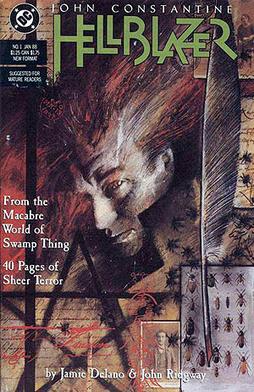 Let's start with his nearly four year run on Hellblazer, a book that is much darker and grittier than the Constantine movie that featured Neo. Four years on an occult book, writing some of the most inspired stories of a ruthless bastard magician who fights dirty and seems to have equal contempt for both God and Satan? That's a lot of time for anyone, and yet it's a magnificent run of storytelling, with black humor and deep, thought provoking storylines.
 He also did a year and a half on The Demon, which was a character traditionally drawn into standard super-hero books, that never really seemed to belong. Ennis added an edge to the series, and wrote stories of Etrigan that were disturbing, without losing their place in the hero genre. For me this was a marginal hero genre book (Etrigan is NOT a hero) that didn't live up to the run on Hellblazer, but did give us one magnificent by-product; HITMAN.
 In 1995 Ennis wrote a couple of vertigo titles which were deeply woven with religious tones. Goddess was an 8 issue limited series, that does make for a very good read, but picking between the two of them is easy for me; Preacher is the winner. Now before you go out and pick it up to read it, be aware that it is blasphemous, crude and vulgar to the extreme. As I have said before, at the time that it was released I believed that there was an excellent chance that it would be banned. Six years later the story ended, and not one bit of it was ever banned (at least not in Canada.) It is a twisted and dark look at religion and God, and while I do not endorse the subject matter, the storytelling is brilliant. Arseface alone is worth the series.
 Shortly after the launch of Preacher, Garth brought a character he introduced in The Demon to the world in his own comic series. Hitman followed the exploits of Tommy Monaghan, a professional hitman who had been attacked by an alien parasite and had acquired limited short-range telepathy. Like Demon, I think this was one of those effort by Garth to be just on the fringe of the hero genre, without fulling entering into it, and unlike The Demon, I think that this one was a home run. It's twisted, funny and completely outrageous, and it doesn't miss a beat.....even when Tommy meets Batman. How the man makes retarded seem reasonable is beyond me. I think he was dropped on his head as a child.
Anyways, I could walk through numerous more titles, and continue to illistrate how little work Garth did for DC in the hero genre, but the pattern would remain the same. From time to time he would do some hero work, and when he did it it was often exceptional. But the breadth of his superior writing was often saved for other genres, and he has put together terrific character studies that are well worth the read. Even just a quick glance over his other work at DC gives you....
1. Bloody Mary
2. Heartland
3. Pride & Joy
 4. Adventures In The Rifle Brigade (feels like Hitman)
5. Enemy Ace
6. War Story (multiple tales taken from wartime)
7. Unknown Soldier (a very grim take - I liked it)
Getting outside DC, he has two other books that I think are "big." The Boys & Punisher. Both appear at first glance to be hero genre books, but if you read a little bit deeper I think you'll see that neither of them really is. The Boys is, on many levels, an assassination of the super-hero genre, while his epic Punisher run was so far removed from the anti-hero with a gun feel of standard Punisher books that it got a mature rating and moved to a different imprint to distinguish it. I recommend both of those titles, and I suspect that once you read Garth's Punisher you'll have a hard time taking anyone else's as seriously.


Garth just seems to really like working on stories that give him a real chance to delve into people and their issues, and he appears to prefer to do it in less common genres. He's done terrific books in a variety of genres like war (Battlefields), the apocalypse (Just A Pilgrim), horror (Crossed), religion (Chronicles of Wormwood), science fiction (Dan Dare), western (Streets of Glory), mafia (Back To Brooklyn) and others, and he never fails to deliver.
But you have to wonder, given his industry and his surroundings.......
does he just not like super-heroes?
1. Is anyone interested?
2. Does everyone know their works?
3. If we could only pick six things to review for each person, what would it be?
With the questions out there, I'll wait to see what kind of responses we get before I press on in that vein.
Today though, I thought I would spend a little more time talking about one of my all-time favorite writers. Before I get into it though, I wanted to point out that I find myself most fascinated by non-traditional super-hero comics that are written by writers to have come out of the British Isles. Coincidence or is there something in the water? Ellis. Ennis. Gaiman. Moore. Millar.
Now, while I love a good super-hero tale as much as anyone, I'm also impressed by writers who can keep me interested in comics with other genres, and few people have done that better than Garth Ennis. A quick look through his bibliography on Wikipedia (http://en.wikipedia.org/wiki/Garth_Ennis_bibliography) will show you just how much time he has spent outside of the core market of comic books. Compared to most, you would be hard pressed to understand how exactly he has become such a success. The truth is that super-hero comics are what pays the bills, and those people who abstain from them with the regularity that Garth does foten cannot get a proper foothold in the industry.
Because his work with DC is probably his most extensive mainstream North American work, I thought I would take some time to walk those of you unfamiliar with it through the various books and demonstrate what I think is a pattern of avoiding traditional super-hero writing.
Anyways, I could walk through numerous more titles, and continue to illistrate how little work Garth did for DC in the hero genre, but the pattern would remain the same. From time to time he would do some hero work, and when he did it it was often exceptional. But the breadth of his superior writing was often saved for other genres, and he has put together terrific character studies that are well worth the read. Even just a quick glance over his other work at DC gives you....
1. Bloody Mary
2. Heartland
3. Pride & Joy
5. Enemy Ace
6. War Story (multiple tales taken from wartime)
7. Unknown Soldier (a very grim take - I liked it)
Getting outside DC, he has two other books that I think are "big." The Boys & Punisher. Both appear at first glance to be hero genre books, but if you read a little bit deeper I think you'll see that neither of them really is. The Boys is, on many levels, an assassination of the super-hero genre, while his epic Punisher run was so far removed from the anti-hero with a gun feel of standard Punisher books that it got a mature rating and moved to a different imprint to distinguish it. I recommend both of those titles, and I suspect that once you read Garth's Punisher you'll have a hard time taking anyone else's as seriously.
Garth just seems to really like working on stories that give him a real chance to delve into people and their issues, and he appears to prefer to do it in less common genres. He's done terrific books in a variety of genres like war (Battlefields), the apocalypse (Just A Pilgrim), horror (Crossed), religion (Chronicles of Wormwood), science fiction (Dan Dare), western (Streets of Glory), mafia (Back To Brooklyn) and others, and he never fails to deliver.
But you have to wonder, given his industry and his surroundings.......
does he just not like super-heroes?
Tuesday, February 02, 2010
Is Grant Morrison too smart for comics?
The comic world loves Grant Morrison.
It seems like an inescapable truth that the world of comic books has had a love affair with Grant Morrison since his reinvention of Animal Man for DC Comics back in the 1980's. I remember the run, and can tell you with some certainty that he turned an otherwise laughable character into an intriguing and creative title that was a must-read throughout his tenure on the book. (Makes me wonder if I was on to something with my argument about Blue Beetle & Booster Gold earlier!) He followed it up with many commercial successes, and even more critical successes. In a simplified chronology of what has garnered his greatest fame I present this to you:
1. Animal Man
2. Doom Patrol
3. Arkham Asylum
4. Kill Your Boyfriend
5. Aztek (*highly underrated!)
6. Justice League (the relaunch that might have the best Justice League story ever!)
7. The Invisibles
8. JLA: Earth 2
9. New X-Men
10. We3
11. Seven Soldiers Megaseries
12. All Star Superman
13. 52 (contributing writer)
14. Batman
15. Final Crisis
16. Batman & Robin
Why walk you through the seminal moments of his career? Easy. Because for me Grant Morrison is a strange mixture of must reads and over-thought frustrations.
Let's just get this out of the way really early on in the conversation; the man is smart. Sometimes I wonder if he isn't too smart to be writing comic books. He's smart like my friend the math genius, who makes me feel like that dumb bastard Affleck in Good Will Hunting. Why is that a problem? Because sometimes his stories are so smart that they lose me in their layers and levels, leaving me wondering if he's just wasted my time, instead of marveling at his brilliance and insightfulness.
A conversation with another one of this blog's followers brought about the same evaluation of Batman Rest In Peace. He found the story overdone to the point that much of its layered brilliance was lost on him. Does Morrison actually expect that enough of his audience is in tune with his goals that they appreciate his efforts to tie together aspects of every era of Batman story telling that has ever existed? And even if, with the light of reason targeted on it, you can follow the subtle details that make it all work.......does that give him an excuse for trying to write Bat-Mite into a story arc? Is there any excuse for that?
At its heart, the story was smart and the manner in which he drew upon pieces of Batman continuity long abandoned and tied it together to make it relevant once again showed a literary genius that will win him many, many awards. It might even win him some fans. But it will never, in my humble opinion, accomplish what he managed to achieve on other projects where he didn't beat his readers over the head with their own ignorance. What amongst his work did I like best? I was obviously very high on his Justice League relaunch, in which he was tasked with overhauling the team and bringing back the "big guns." The first four issues were tremendous, and the moment where Superman declared Batman the most dangerous man alive was epic.
I also loved his (now) lesser recognized tales, like Aztek (which he did with soon to be VERY famous Mark Millar - he of Kick Ass fame) and Kill Your Boyfriend. Animal Man was a personal favorite as well, but I have a soft spot, as you all know, for fringe characters who are given reworks by major writing talents. His newest work on Batman & Robin has also been very impressive, as he details the story that he set the stage for when he killed Bruce Wayne in Final Crisis (more on that shortly.) His pairing of Dick with Damien makes the book work, and brings a different style to the classic Dynamic Duo. Also, I did enjoy 52. A weekly book tying together a series of seemingly unrelated events, all culminating in Final Crisis? Good work.
Now Final Crisis was a different issue. It was really a story about the end of the Fourth World and the coming of the Fifth World. I was good with that part. But it also became so much more, and for me that was where the problems started. Sometimes I find Grant's stories a little bit too all-encompassing. The net result of which is that in tying up every loose end (which for continuity's sake many people like) I often find that I'm being distracted from the story I care about for the story that seems to just be added in for no reason. There were so many elements going on in Final Crisis, that it felt convoluted instead of smooth. Did I like the overall story of the conquest of Earth, and Darkseid's fall at the hands of "just a man." Yes. Did I need to have myself distracted with stories of renegade Monitors at the end of time, or virus' from parallel dimensions?
Absolutely not.
So this may just be personal taste.......and maybe it's because I'm just not that smart a guy.......but more Grant Morrison would be great (and guess who is writing Batman back into DC?).......but if he could just suffer some head trauma first?
That would be great.
Dumb it down a little Grant.
That's all I'm asking.
It seems like an inescapable truth that the world of comic books has had a love affair with Grant Morrison since his reinvention of Animal Man for DC Comics back in the 1980's. I remember the run, and can tell you with some certainty that he turned an otherwise laughable character into an intriguing and creative title that was a must-read throughout his tenure on the book. (Makes me wonder if I was on to something with my argument about Blue Beetle & Booster Gold earlier!) He followed it up with many commercial successes, and even more critical successes. In a simplified chronology of what has garnered his greatest fame I present this to you:
1. Animal Man
2. Doom Patrol
3. Arkham Asylum
4. Kill Your Boyfriend
5. Aztek (*highly underrated!)
6. Justice League (the relaunch that might have the best Justice League story ever!)
7. The Invisibles
8. JLA: Earth 2
9. New X-Men
10. We3
11. Seven Soldiers Megaseries
12. All Star Superman
13. 52 (contributing writer)
14. Batman
15. Final Crisis
16. Batman & Robin
Why walk you through the seminal moments of his career? Easy. Because for me Grant Morrison is a strange mixture of must reads and over-thought frustrations.
Let's just get this out of the way really early on in the conversation; the man is smart. Sometimes I wonder if he isn't too smart to be writing comic books. He's smart like my friend the math genius, who makes me feel like that dumb bastard Affleck in Good Will Hunting. Why is that a problem? Because sometimes his stories are so smart that they lose me in their layers and levels, leaving me wondering if he's just wasted my time, instead of marveling at his brilliance and insightfulness.
A conversation with another one of this blog's followers brought about the same evaluation of Batman Rest In Peace. He found the story overdone to the point that much of its layered brilliance was lost on him. Does Morrison actually expect that enough of his audience is in tune with his goals that they appreciate his efforts to tie together aspects of every era of Batman story telling that has ever existed? And even if, with the light of reason targeted on it, you can follow the subtle details that make it all work.......does that give him an excuse for trying to write Bat-Mite into a story arc? Is there any excuse for that?
At its heart, the story was smart and the manner in which he drew upon pieces of Batman continuity long abandoned and tied it together to make it relevant once again showed a literary genius that will win him many, many awards. It might even win him some fans. But it will never, in my humble opinion, accomplish what he managed to achieve on other projects where he didn't beat his readers over the head with their own ignorance. What amongst his work did I like best? I was obviously very high on his Justice League relaunch, in which he was tasked with overhauling the team and bringing back the "big guns." The first four issues were tremendous, and the moment where Superman declared Batman the most dangerous man alive was epic.
I also loved his (now) lesser recognized tales, like Aztek (which he did with soon to be VERY famous Mark Millar - he of Kick Ass fame) and Kill Your Boyfriend. Animal Man was a personal favorite as well, but I have a soft spot, as you all know, for fringe characters who are given reworks by major writing talents. His newest work on Batman & Robin has also been very impressive, as he details the story that he set the stage for when he killed Bruce Wayne in Final Crisis (more on that shortly.) His pairing of Dick with Damien makes the book work, and brings a different style to the classic Dynamic Duo. Also, I did enjoy 52. A weekly book tying together a series of seemingly unrelated events, all culminating in Final Crisis? Good work.
Now Final Crisis was a different issue. It was really a story about the end of the Fourth World and the coming of the Fifth World. I was good with that part. But it also became so much more, and for me that was where the problems started. Sometimes I find Grant's stories a little bit too all-encompassing. The net result of which is that in tying up every loose end (which for continuity's sake many people like) I often find that I'm being distracted from the story I care about for the story that seems to just be added in for no reason. There were so many elements going on in Final Crisis, that it felt convoluted instead of smooth. Did I like the overall story of the conquest of Earth, and Darkseid's fall at the hands of "just a man." Yes. Did I need to have myself distracted with stories of renegade Monitors at the end of time, or virus' from parallel dimensions?
Absolutely not.
So this may just be personal taste.......and maybe it's because I'm just not that smart a guy.......but more Grant Morrison would be great (and guess who is writing Batman back into DC?).......but if he could just suffer some head trauma first?
That would be great.
Dumb it down a little Grant.
That's all I'm asking.
Monday, February 01, 2010
Garth Ennis creates something worse than zombies
Some books are just disturbing.
Sometimes I read a book and my first reaction is to recoil in shock and wonder how the author even managed to dream up, let alone articulate, such a horrific concept or idea. Other times my shock comes from the comfort that the author seems to have in exploring the blasphemous or typically offensive material that is comprising the core of his tale. Through many of these experiences I find a single constant; his name is Garth Ennis.
For me Garth was a revelation, when I stumbled across the very first issue of Preacher sitting on the shelves of a shop that I was working for while in University. My first reaction? I bought every copy, assuming the book would end up being banned. Its content was not only visually shocking, but the subject matter almost seemed to request censorship. The book never was banned, but I made out like a bandit when it shot up in price and became THE BOOK for back issue collectors a couple of years later. Lucky me.
Since Preacher, Garth has continued to find and explore dark, terrible visions in a way that I can state is firmly and uniquely his own. For many people his run on Punisher is the definitive story of Marvel's murderous mundane vigilante. What made it truly frightening is that he wasn't shying away from the truly terrible stories of everyday life; including child abuse and human slave trafficking. True there was always a dark mix of humor written into the books, but it was overshadowed by Garth's interpretation of a man who might well exist. Maybe that's part of what made it so gripping. The book wasn't rife with super-heroes or men in tights, and so it seemed plausible.
His newest release for the obvious evil that is rooted in his soul is a book published over at Avatar Comics by the name of Crossed. It follows in the footsteps of the recent rage of zombie comics, and then takes them to a darker place. And before you ask.....yes.....zombie comics can get darker. MUCH DARKER. In Crossed we are following a select group of human survivors as they try and survive in a landscape that is clearly turning against them. The 'crossed' aren't just your everyday zombies, content to eat brains and seek fresh meat. We don't yet know how it started, but what we do know is that it is an infection that can be transmitted through fluid exchange (saliva, blood or semen.) The infection seems to not only drive the infected mad, but also seems to bring forth the basest and most foul instincts of humankind.
It was easy the first couple of times I read through the eight issues that have been released thus far to forget that I was reading a tale about survivors and get caught up in the simple grotesque fascination I had with the horrors that Garth was unleashing in each issue. At first glance the book appears to be a tale about what we see as mankind's last survivors. With more thought though, I find that it strikes a deeper note. This books is about the survival of the concept of humanity, and it is the survivors of the plague who are proving to be poor stewards of that trust. In issue 3 we are introduced to a school teacher who has been killing people in order to provide food for starving children. While completely disgusted by the choices that she made, our group of survivors ultimately recognize that they cannot care for the children, and so choose to kill them rather than leaving them to try and survive on their own.
While an attempt is made to rationalize the choice, it is ultimately a choice to act inhumanely. The book continues to show us the slow, but steady, sacrifice of humanity that each person is going through in their efforts to survive the plague. Issue eight was the culmination of that failure, when the central character of the story (and the narrator) shoots a man in cold blood simply because he didn't like the man. It is in that moment that he recognizes his own mounting inhumanity and sets out to try and help the woman he has clearly become infatuated with to reclaim her own lost humanity.
The book has become a tale of the crossed (who, by the way, are showing dangerous signs of becoming more cunning and smart) who remain true to their own nature, vile though it is, and the humans, who you could argue are either failing in their humanity, or embracing the one savage truth of our species; self-preservation trumps all else.
The book is a terrificly, offensive read that leaves me so distracted by it's moral vacuum that I almost always forget to ask the bigger questions, like 'Where did the plague come from?' and 'Is it global?' and 'Will mankind survive?'
But the biggest questions of all are......
Are you reading it?
&
What do you think?
Sometimes I read a book and my first reaction is to recoil in shock and wonder how the author even managed to dream up, let alone articulate, such a horrific concept or idea. Other times my shock comes from the comfort that the author seems to have in exploring the blasphemous or typically offensive material that is comprising the core of his tale. Through many of these experiences I find a single constant; his name is Garth Ennis.
For me Garth was a revelation, when I stumbled across the very first issue of Preacher sitting on the shelves of a shop that I was working for while in University. My first reaction? I bought every copy, assuming the book would end up being banned. Its content was not only visually shocking, but the subject matter almost seemed to request censorship. The book never was banned, but I made out like a bandit when it shot up in price and became THE BOOK for back issue collectors a couple of years later. Lucky me.
Since Preacher, Garth has continued to find and explore dark, terrible visions in a way that I can state is firmly and uniquely his own. For many people his run on Punisher is the definitive story of Marvel's murderous mundane vigilante. What made it truly frightening is that he wasn't shying away from the truly terrible stories of everyday life; including child abuse and human slave trafficking. True there was always a dark mix of humor written into the books, but it was overshadowed by Garth's interpretation of a man who might well exist. Maybe that's part of what made it so gripping. The book wasn't rife with super-heroes or men in tights, and so it seemed plausible.
His newest release for the obvious evil that is rooted in his soul is a book published over at Avatar Comics by the name of Crossed. It follows in the footsteps of the recent rage of zombie comics, and then takes them to a darker place. And before you ask.....yes.....zombie comics can get darker. MUCH DARKER. In Crossed we are following a select group of human survivors as they try and survive in a landscape that is clearly turning against them. The 'crossed' aren't just your everyday zombies, content to eat brains and seek fresh meat. We don't yet know how it started, but what we do know is that it is an infection that can be transmitted through fluid exchange (saliva, blood or semen.) The infection seems to not only drive the infected mad, but also seems to bring forth the basest and most foul instincts of humankind.
It was easy the first couple of times I read through the eight issues that have been released thus far to forget that I was reading a tale about survivors and get caught up in the simple grotesque fascination I had with the horrors that Garth was unleashing in each issue. At first glance the book appears to be a tale about what we see as mankind's last survivors. With more thought though, I find that it strikes a deeper note. This books is about the survival of the concept of humanity, and it is the survivors of the plague who are proving to be poor stewards of that trust. In issue 3 we are introduced to a school teacher who has been killing people in order to provide food for starving children. While completely disgusted by the choices that she made, our group of survivors ultimately recognize that they cannot care for the children, and so choose to kill them rather than leaving them to try and survive on their own.
While an attempt is made to rationalize the choice, it is ultimately a choice to act inhumanely. The book continues to show us the slow, but steady, sacrifice of humanity that each person is going through in their efforts to survive the plague. Issue eight was the culmination of that failure, when the central character of the story (and the narrator) shoots a man in cold blood simply because he didn't like the man. It is in that moment that he recognizes his own mounting inhumanity and sets out to try and help the woman he has clearly become infatuated with to reclaim her own lost humanity.
The book has become a tale of the crossed (who, by the way, are showing dangerous signs of becoming more cunning and smart) who remain true to their own nature, vile though it is, and the humans, who you could argue are either failing in their humanity, or embracing the one savage truth of our species; self-preservation trumps all else.
The book is a terrificly, offensive read that leaves me so distracted by it's moral vacuum that I almost always forget to ask the bigger questions, like 'Where did the plague come from?' and 'Is it global?' and 'Will mankind survive?'
But the biggest questions of all are......
Are you reading it?
&
What do you think?
Saturday, January 30, 2010
Maybe mankind is......IRREDEEMABLE
Two in one day?
Yes............and no.
I missed getting up the last blog yesterday, which was the original intention for that topic. It will happen, from time to time, that I will be written out (I do a lot of recreational writing over at Federation X) on some occasions or I will give up the writing time in order to spend a little bit more quality time with the family, and I will be behind my goal of posting a blog each day. Most of the time that will result in me writing an extra blog the next day. This is one of those occasions.
Before I get into the book I want to talk about today, I'm going to answer a question I got over MSN (you can always find me there under lord_noron@hotmail.com) the other day. How exactly do I choose the topics that I'm blogging about on any given day. Why is it books some days, writers on other days and some days its just the general state of the industry. The answer is very simply that I write about whatever I feel like at the time. Sometimes I've been discussing a book with somebody and I feel passionately that I need to expose other people to it. Other times I'm pissed off with the way in which a company has handled a situation and I want to rant about that. Whatever it is you see on a given day, you can count on the fact that it stemmed from a conversation or a book that I read.
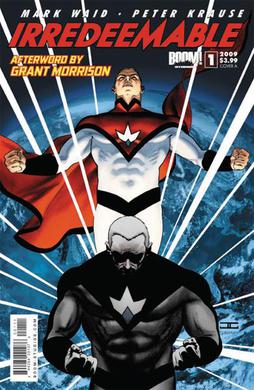 Which is the case with today's topic; Irredeemable.
Are you reading this small publishers brilliant book about a world in which their iconic hero has turned evil? if you're not, you should be. I speak at length about a number of writers who changed my grasp of what comic books could be, and Mark Waid is always foremost in my mind during that dialogue with anyone. For me Mark is the man who made The Flash a book I couldn't afford to ignore, gave us all the epic elseworld Kingdom Come and isn't afraid to exploit the darker aspects of our heroes for the benefit of sensational story telling (Tower of Babel in JLA comes to mind!)
Irredeemable (and its new companion book Incorruptible) are published by BOOM! Studios and are absolutely fantastic. The Plutonian is this world's version of Super-Man and he is so far above the power level of his peers that it's like seeing a Justice League with Superman, Green Arrow, Black Canary, Beast Boy & Plastic Man; you wonder if he just keeps them around to make them feel needed. Power and a sense of separation from the world he serves is where the similarities begin and end though. In this interpretation of the archetype hero that started it all, we get a man who isn't nearly as resolute as he at first appeared.
In this series, Mark tackles a subject that most of don't give a lot of thought to; what if a person isn't properly equipped emotionally to deal with the stresses placed on the world's greatest heroes? In too many cases we see that the general understanding in comic books is that if they put on the spandex, they have what it takes at heart. Life isn't like that though, and in this book Mark draws on the real life struggles of people to cope emotionally with what the world gives them for a life, while remembering that his readers have come looking for stories about people who fly.
In Superman we have been shown the ideal; a man who is at his best when the world is at its worst. In The Plutonian we are shown the exact opposite. He is a man who wanted to be the best, but whose fragile emotionally layers were chipped away by the insecurities and psychological damage that was forged in him as a child. His eventual failure as a hero, and actions as a villain seem almost inevitable in the context of his story, and yet they remain terrible demonstrations of the worst elements of humanity's capacity to lash out at others in times of pain and suffering.
This series is another homerun from Waid, and I hope it is getting enough exposure to keep it in publication for some time to come. It may be the best hero comic not published by DC or Marvel. As a little extra for you, here's the link to the youtube video the company launched in advance of the series being released. Small companies do some of the most interesting things.
World Premiere: Mark Waid's Irredeemable: The Trailer
I'm thinking that tomorrow we should take a break from talking about great super-hero comics and talk about the terrific non-hero books that are being published right now.
What do you guys think?
Yes............and no.
I missed getting up the last blog yesterday, which was the original intention for that topic. It will happen, from time to time, that I will be written out (I do a lot of recreational writing over at Federation X) on some occasions or I will give up the writing time in order to spend a little bit more quality time with the family, and I will be behind my goal of posting a blog each day. Most of the time that will result in me writing an extra blog the next day. This is one of those occasions.
Before I get into the book I want to talk about today, I'm going to answer a question I got over MSN (you can always find me there under lord_noron@hotmail.com) the other day. How exactly do I choose the topics that I'm blogging about on any given day. Why is it books some days, writers on other days and some days its just the general state of the industry. The answer is very simply that I write about whatever I feel like at the time. Sometimes I've been discussing a book with somebody and I feel passionately that I need to expose other people to it. Other times I'm pissed off with the way in which a company has handled a situation and I want to rant about that. Whatever it is you see on a given day, you can count on the fact that it stemmed from a conversation or a book that I read.
Are you reading this small publishers brilliant book about a world in which their iconic hero has turned evil? if you're not, you should be. I speak at length about a number of writers who changed my grasp of what comic books could be, and Mark Waid is always foremost in my mind during that dialogue with anyone. For me Mark is the man who made The Flash a book I couldn't afford to ignore, gave us all the epic elseworld Kingdom Come and isn't afraid to exploit the darker aspects of our heroes for the benefit of sensational story telling (Tower of Babel in JLA comes to mind!)
Irredeemable (and its new companion book Incorruptible) are published by BOOM! Studios and are absolutely fantastic. The Plutonian is this world's version of Super-Man and he is so far above the power level of his peers that it's like seeing a Justice League with Superman, Green Arrow, Black Canary, Beast Boy & Plastic Man; you wonder if he just keeps them around to make them feel needed. Power and a sense of separation from the world he serves is where the similarities begin and end though. In this interpretation of the archetype hero that started it all, we get a man who isn't nearly as resolute as he at first appeared.
"What if you go from, you know, Captain America to Doctor Doom? What if you go from Superman to Lex Luthor? How do you go from being the greatest hero in the world — someone that everybody knows, and everybody loves, and everyone recognizes — to the greatest villain in the world? What is that path? It's not a light switch, it's not an on-off switch, it's not something that you wake up one day and just become evil."
—Mark Waid on the basis for Irredeemable
In this series, Mark tackles a subject that most of don't give a lot of thought to; what if a person isn't properly equipped emotionally to deal with the stresses placed on the world's greatest heroes? In too many cases we see that the general understanding in comic books is that if they put on the spandex, they have what it takes at heart. Life isn't like that though, and in this book Mark draws on the real life struggles of people to cope emotionally with what the world gives them for a life, while remembering that his readers have come looking for stories about people who fly.
In Superman we have been shown the ideal; a man who is at his best when the world is at its worst. In The Plutonian we are shown the exact opposite. He is a man who wanted to be the best, but whose fragile emotionally layers were chipped away by the insecurities and psychological damage that was forged in him as a child. His eventual failure as a hero, and actions as a villain seem almost inevitable in the context of his story, and yet they remain terrible demonstrations of the worst elements of humanity's capacity to lash out at others in times of pain and suffering.
This series is another homerun from Waid, and I hope it is getting enough exposure to keep it in publication for some time to come. It may be the best hero comic not published by DC or Marvel. As a little extra for you, here's the link to the youtube video the company launched in advance of the series being released. Small companies do some of the most interesting things.
World Premiere: Mark Waid's Irredeemable: The Trailer
I'm thinking that tomorrow we should take a break from talking about great super-hero comics and talk about the terrific non-hero books that are being published right now.
What do you guys think?
Blue Beetle, Booster Gold & why Geoff Johns needs spelling lessons...
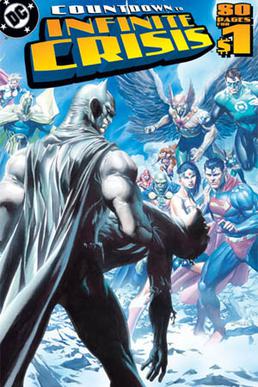
Are they really b-grade characters or did they always just get b-grade writing?
For the longest time I understood who the ‘big guns’ of the comic book world were with a sort of clarity that life doesn’t normally provide. Superman, Batman and Wonder Woman were the three largest icons in DC (and arguably all of comicdom) while Marvel was championed by Spider-Man, The X-Men (who are only stars collectively – except for Wolverine) and The Incredible Hulk. Sure there were always your assortment of near-stars, like Iron Man, Thor and Captain America at Marvel and Green Lantern, Flash and Aquaman at DC, but the difference always seemed crystal clear to me. The icons, the stars and then everyone else. That was just how it was.
Then the millennium turned, and everything started to change. By the middle of the last decade, the last vestiges of certainty were wiped out in one simple, yet brilliant comic book. It was written with the combined talents of three of DC's best; Geoff Johns (who, for a writer, really should learn how to spell.....it's JEFF), Greg Rucka (who may still be too underrated as a scribe) and Judd Winnick. Just to show you how this book changed my understanding of whether or not characters were b-grade, or simple the net result of the writers that were assigned to them, I'm going to......***********SPOILER ALERT*********.....let a 5 year old secret out of the bag;
Maxwell Lord killed the Blue Beetle in this book.
Did you yawn? I wouldn't blame you if you took the time to switch to another channel during that commercial, because let's face it, the news of The Blue Beetle's death wasn't exactly going to be met with screams of suffering and cries for a revision to save the beloved character. Moreover, did you even take note of the name Maxwell Lord? Why would you? His sole claim to fame was a brief period of time that he spent associated with The Justice League International and his stories were considered so uninteresting to comic fans that when they needed to revamp his history to make his role in Infinite Crisis work, the decision was made to do it based on the belief that nobody cared anyways (Wiki Maxwell Lord and read the comments by DC EiC Dan Didio.)
Now that you have been significantly unmoved by the news I have revealed, go and read this book. You don’t even have to be a fan of super-hero type comic books to appreciate the terrific story telling that takes place in Countdown to Infinite Crisis. The writers managed to use Beetle’s history as a b-grade character to alienate him sufficiently from the big guns of the DCU just enough that he is left to confront a growing danger to the entire world on his own. As good writers do, they both build and tear down relationships through the story in a way that leaves us feeling more compassionate and impressed with Ted Kord than we have ever been before, and as a result, I think, his death resonates. It is a death worthy of a tier one character. Have a read and tell him what you think.
Now, how does that relate to Booster Gold? Michael Carter was Ted Kord’s best friend, and he too was trapped hopelessly in the second (maybe third) tier of DC characters for years. Booster plays an important part in Countdown, and in the Crisis that follows, though it is my belief that his significance is often overlooked. The moment where he accuses the big three of being to blame for Ted’s death is exceptional drama. With all of that said, I really felt like DC was missing a golden opportunity with Booster Gold, and I said as much to Geoff Johns at the Toronto Comicon in the summer of 2006. In my mind the writers were really missing something crucial that should have resulted from Ted’s death; Michael’s transformation.
Who amongst us wouldn’t be transformed by watching our best friend walk off to face evil when we were unable to help, and the greatest heroes in the world were unwilling. More than that, when he died, how deeply would we be moved? How long would we spend looking into our own life and values and examining them? I felt that while Booster had continued to play a role in the story of Infinite Crisis, and the year long odyssey of 52, that it failed to properly illustrate a man who should be profoundly changed by what happened to his best friend. In my mind friendship should have been the catalyst that turned Booster Gold into DC’s version of Iron Man. A technology based hero (Booster’s gear all comes from over 1,000 years in the future) who was ready to take his place amongst the Justice League’s elite.
I’ll never forget Geoff’s response. He said, basically, “Yeah, I think they should do more with him too. That character has such great potential to tap.”
In case any of you didn’t know, Mr. Johns is a great big jerk, who was well aware that he was preparing to launch the second volume of Booster Gold, with a storyline designed to seriously elevate Booster’s station in DC continuity and to reflect the emotional changes that Booster underwent when Ted died. He just didn’t want to tell me about it at the time. That series launched in 2007, and I have been giving it rave reviews ever since. The opening story arc, entitled 52 Pick-Up was one of the most brilliant writing jobs I have ever seen, because it brought together a new storyline with a number of older storylines to answer some terrific formative questions about the relationship between Booster Gold and Batman. That moment in which Batman revealed that he had always known the hero that Booster would become, and had been so hard on him in his early years because he wasn’t that man yet……genius.
Assigning such writing luminaries as Geoff Johns, Dan Jurgens and Chuck Dixon to the series has given Booster a much more credible position in DC true, but it has also done so much more. With top tier writing talent taking on the character, we have seen the growth of the character’s back-story, and watched the development of the man who was once a cautionary tale for young heroes into a man who is willing to sacrifice fame and fortune for the greater good. In the end, Ted Kord had to die to matter, and Michael Carter had to endure that loss to become the man he was always fated to be.
How many other characters who get laughed at, ignored or treated like b-grade properties could actually become tor tier talents with strong, relevant storylines that impact the bigger picture of the company that publishes them if only the talent assigned to write them was better?
Sometimes characters are only “losers” because the writers and editors who had them before were unwilling or unable to make them better than that.
As an final note…..that guy nobody really thought much of (Maxwell Lord) when he was running around in the pages of Justice League International? He turned out to be kind of a big deal in Infinite Crisis. The revamp might have been choppy (or non-existent) but the story they were able to tell with him afterwards was solid.
Characters just need purpose.
And writers.
Thursday, January 28, 2010
Marvel's second tier of books are better than its first tier, and an Authority run ends with a whimper
Marvel Comics.
Let me guess. When you think about Marvel Comics you think about the very best comic book titles being published in the world today. Naturally that means you’re thinking about Black Panther, Incredible Hercules, Nova, Secret Warriors and Guardians of The Galaxy. No? Well don’t feel bad. Like many other people reading Marvel comic books, you’re probably following the more mainstream recognized top tier books for Marvel, and with the limited budget that many people have available to them you’re not able to explore titles with which you’re not already familiar. With that said, today I would like to spend a little bit of time telling you what I really enjoy about some of Marvel’s “B” books, and why I think they are more engaging than many of their “A” books.
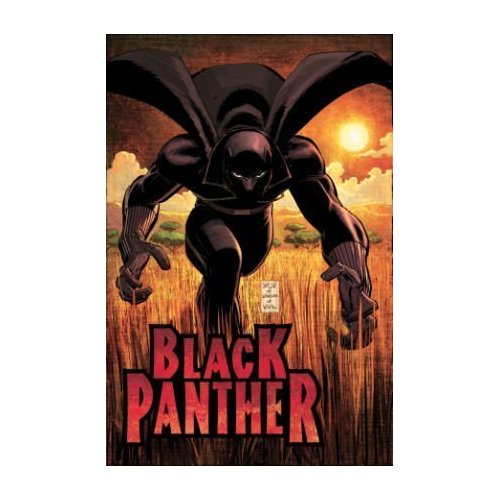

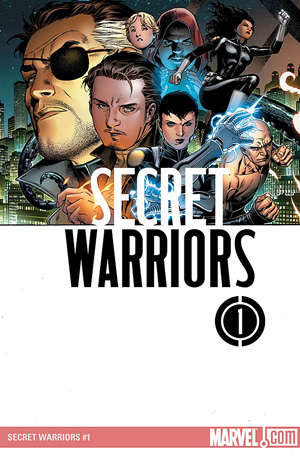


Now before I sign off, I should mention that while I have almost always enjoyed the work of Misters Abnett and Lanning, I found their recent ending to their time on The Authority for Wildstorm to be rushed, choppy and unfulfilled. The premise that they were working on had legs and should have been allowed to run its course naturally, instead of being hurried to a resolution to make way for a new direction. I don’t know if that’s their fault for not pacing the story better, or Jim’s fault for rushing their ending, but it left a sour taste in my mouth and I dropped the book.
Also, if you're read Morrison's Batman RIP, I'd like your thoughts. We may have to discuss it some day soon.
Wednesday, January 27, 2010
Meaningless publishing, more Robinson love and an outcry for The Martian Manhunter
Years ago I read every Batman and Superman comic that was published each month by DC Comics. I took pride in the fact that I owned, read and understood everything that was happening inside the scope of their respective ‘universes.’ But at the same time when the bubble on comic books was bursting, publishers were also starting to crank out more and more special issues, limited series and hard covers. Many of the primary characters for both of the major publishing companies also started to see their regular monthly book become two regular monthly books (or in some cases…..X-Men……17 regular monthly books.) As a man on a budget, I was forced to cut back. For months I attempted to cut on other books. I tried to weed out the ‘fringe’ books that I was reading in an effort to stay strong in my reading of the core books. When Superman and Batman became an average of 8 books a month each (or roughly 2/week) enough was enough and I made the call; no more Superman and Batman.
If you know me, you know what a tough decision that was. True, many months in that period these were books that were stuck in a rut and failing to show the ground breaking creativity that they have both seen in recent years, but that didn’t make it any easier for me. These were my staples. My primary arch types for great heroes. These were the two who had started it all for me. Letting them go and moving on to better written books, with single issue monthly programs was hard for me to do. Every time I considered coming back to them, I found out that in addition to the main monthly title, they were also in the middle of a limited series, that would inevitably end up meaning next to nothing to the overall continuity of the character and his supporting cast. That always kept me away.
There are few things I hate more in comic books than stories that don’t serve a purpose. I say that in a very matter-of-fact way, when in all actuality I could probably dig through my rather large collection and find you numerous occasions where limited series or one shots were completely irrelevant to the character’s main continuity, and yet I still loved the book. Sometimes great writing trumps the rule that all stories should serve some kind of purpose, and even I have to bow down to that writing and admit when it has defeated my rule. But all too often I find that the limited series is used as a tool for increasing sales for a couple of months without truly developing the character, and making a significant impact.
That was one of my primary concerns with the idea of reading Justice League: Cry For Justice, despite the fact that it was being written by superstar scribe James Robinson. With such a limited comic budget these days, and the ever rising cost of the books themselves, I get very agitated when I waste money on a meaningless story instead of reading a more intelligently written book. I needn’t have worried about Cry For Justice. In the back of Issue #1 James spends some time discussing how important it was to him that he not take on a project just for the sake of doing a project. He wanted the story to have real consequences in the overall scope of Justice League lore, and committed himself to that path. I appreciate that.
We read so much hype and hyperbole in anticipation of major comic stories, limited series or otherwise, that it has become hard to glean what is going to actually be a significant story and what is not. Leave it to a true professional like Mr. Robinson to recognize that it’s not enough for him to write a decent Justice League story. He needs to write something of lasting impact, so that I’m not just handing out money because a book was made. I’m handing it out because it will continue to enhance and deepen my appreciation for stories that will be coming in the future.
I also appreciate that at the outset of the book, he has tackled something that has been pissing me off since Final Crisis; why aren’t the heroes angrier about the murders of Bruce and J’onn? Why did the death of the Martian Manhunter come across as such a minor footnote in the scope of what has happened in the DCU this past year?
That pisses me off.
J’onn J’onzz is a kick ass character (and I recommend Ostrander’s run on the book as a read that gives subtext to the character) who was the backbone of the Justice League since its inception. His death should have resonated around the world because it was a murder. An execution. Nobody should have been safe.
But life moved on and for me that didn’t ring true.
Cry For Justice at least touches on that as it starts up. More importantly, it promises to give me a return for my money that will continue to pay dividends into the future as I will enjoy its lasting influence over future stories.
And is that really too much to ask from a limited series, or one shot?
That it matters?
Tuesday, January 26, 2010
James Robinson, Villains & why Doctor Octopus sucks balls
“Grant Morrison is one of the greatest writers ever in comics."
With those words, James Robinson opened up his dialogue on villains at the back of Justice League: Cry For Justice #3 and presented me with an interesting and insightful challenge. What makes a great villain?
Before I get to the question, I’d like to spend some time talking about an author who, in many circles of comic readership, doesn’t get anywhere near the level of glorification that he deserves. First let me tell you that I think Robinson is every bit the writing phenom that he thinks Morrison is. Robinson breathes a life into everything he writes, and for those readers who are either patient enough to let his stories' never-ending depth suck them in, or familiar enough with his works to know that the payoff is always exceptional, everything he writes is worth reading. My first encounter with James Robinson’s work came in the pages of Starman. At the time I read almost everything that was being published, but Starman, for reasons I cannot remember, failed to make my radar until a man named Clinton handed me a copy and told me that if I didn’t like it I could get a free book of my choice the next week when my shipment came in.
I didn’t like it, not at first. I was, however, immediately introduced to a concept that hadn’t really made any headway until that point in comics; mantles. In that first issue David Knight, son of the Justice Society’s Ted Knight (the first Starman of note,) dies a death that makes Blue Beetles seem grandiose, and in doing so immediately sets in motion events that will force the mantle he so loved to pass from the son who wanted nothing more than to be his father, to the son who never wanted to be anything like his father. The very idea of a generational tale set concepts running through my mind that caused me to pick up the second issue, and then the third. It wasn’t long until I realized that the book I didn’t really like to start with, I loved more than any other.
I have said this many times; Starman is the greatest complete super-hero series in comic history.
I am ashamed to admit for some time following the end of Starman, James fell off my radar. I was at a different place in my life and I was exploring different books. I had grown up a lot, and in that time my expendable budget had shrunk significantly. I simply couldn’t afford to read everything, and so I read a more select assortment of books. Nothing that James was doing at the time found its way routinely onto the list, although I don’t recall what he was doing. My level of awareness was at an all-time low. I only read some of Leave It To Chance, which is a bad thing, because it was a great book. Recently though I was catching up on lost time in 2009, and reading some books I had missed. Seeing that James had picked up a regular role writing for Superman brought a smile to my face, but that smile was doubled in size when I opened the pages to find that his tales were as intricately crafted as ever, and as always pulled forth from the silver age a collection of characters I had loved decades earlier.
In Superman, Robinson had brought back the classic version of Lar Gand that I always found so compelling as a child, and with him a complex puzzle involving disguised, time travelling members of the Legion of Super Heroes. I read every page with the fascination and wonder of my youth once more, and for the first time in a long time I remember what had crafted my passion for comics to begin with. Some digging around unearthed other books that he had been writing, including the onset of a new Justice League mini-series called Cry For Justice (as well as news that he was taking over as the new regular scribe on Justice League Of America!!) I picked up the first 3 issues of Cry For Justice, on sale, with grave concern that I was once again getting sucked into a mini-series that wasn’t going to matter (more on that tomorrow.)
James addressed that in issue 1, and then continued his dialogue with the fans through each of the next two books. It is in the third book that he asked the pivotal question that defines all great heroes; what makes a great villain?
The question isn’t answered, although he does share some opinions. I’m not going to share my thoughts on his topic, but I will share where my contemplation of his question took me; the quality of the villain defines the legacy of the hero. Or, in simple terms, great heroes have great villains. It’s one of the reasons I’ve never understood anyone who argues that the greatest hero ever is somebody other than Batman. It isn’t possible. Batman has all the best villains. It’s actually unfair.
In any event, give what I’ve suggested some thought.
What would you rather see? Spider-Man v Doc Oc (seriously? Octopus arms are supposed to impress me?) or Batman v The Joker? Ghost Rider v Blackheart or Fantastic Four v Doctor Doom (let’s forget about the terrible script and mediocre acting, and just picture the potential folks!) It’s all in the villain.
What makes a great villain? I’m not positive we can nail that down to just one element. What makes a great hero? Now THAT......we can answer.
The villain.
Monday, January 25, 2010
My return and Marvel's event failure pattern
Three and a half years is a long, long time.
For a guy who loves to write, and usually writes somewhere in the vicinity of two thousand words a day just to keep in practice, one might think that it would have taken a lot less time for me to get back to writing about comic books, which anyone can tell you is my single greatest passion. I can’t tell anyone why I’ve been away from the blog for so long, or what it was that ultimately brought me back to it, but I can tell you that in the years that have passed I have stumbled across all manner of things I would like to talk about. With the closing last year of yet another local comic store I have lost my last outlet for verbal discourse with other intelligent (and often unintelligent) comic readers, which is where I am hoping that all of you will step in.
I can’t promise you an insightful literary analysis of the underlying themes of a book, because quite frankly I don’t want to root into the core of a writer’s subtext and expose it for analysis. Somebody else can take the highbrow approach to comic reviews. All I really want to do is talk comics. I want to share with you what I think is working in comics, and what I think is failing. I want to look into the big press blunders and the small press wonders that I find every time I pull a shipment of comics out of the box and start exploring.
If you’re wondering right now what kind of focus I’ll have, I can tell you that I read a fairly even mix of Marvel and DC books, with preferences given to the books that continue to attract the best writers. I follow some small press work, though most of it tends to be written by either Warren Ellis or Garth Ennis, and I can’t remember the last time I got truly excited by anything that Image publishes (although I do enjoy Invincible when I read it.) Comics that draw on history are fascinating when done well, and trite when door sloppily, and if an author or publish let a book’s schedule slide to some kind of erratic schedule I will almost certainly drop it in favor of coming on here and blogging about their failure to respect the fans.
Looking back on the last couple of years I can tell you, as somebody who did reasonably well with Marvel’s recent sale, that I was largely disappointed in the major stories that “my” company pushed. In almost every case I found myself intrigued and excited going into a story, only to have the climax fall far short of the anticipation, leaving me wondering if they would ever learn how to properly complete a story. Maybe we should take a moment to think about what strikes me as some of Marvel’s unmitigated failures in recent years, like House of M, World War Hulk, Civil War and ultimately Secret Invasion (we won’t pass judgment on Dark Reign and its climactic Siege just yet.)
These were all big name events, driven by a simple but solid premise, in which the story leading up to the event was more compelling than the event itself. Watching Hulk and Cap stand their ground against the Marvel heroes who had done them (or the nation; TONY STARK!) wrong only to capitulate and fold at the climax was both frustrating and offensive, and tore their respective stories apart. House of M was a muddle of a story that never really got going and built to the event that it should have become (it would have been better served with a company wide focus reflective of Age of Apocalypse) while Secret Invasion blurred too many lines to have the impact it should have had. If the story had lead to the return of 1 key person (cap) or 1 key team who had long been believed dead, evil or some such, it might have resonated. Instead all it did was muddy the waters surrounding a host of mid-level characters and their ultimate fates in the Marvel Universe.
The events arguably ran from one into another, creating a chronology of events that all seem to be leading to Siege, but now that Siege is here I find myself asking…..”how did they do in building to this?”
Answer: not well.
Before anyone puts the common denominator together, let me just say this; I like Brian Bendis. I like his books and I routinely read MOST of the things that he’s writing (I don’t read Spider-Man because it goes against my religion) so this isn’t a concerted attack on the mastermind of these events. What it is is a condemnation of his ability to deliver a knock-out punch, which in my opinion he hasn’t done since Avengers Disassembled (which he promptly fixed by bringing back Hawkeye in House of M - this is not a compliment.) In small story, month to month writing the man is exceptional. In big story, event writing?
I haven’t seen it yet.
Next up?
Let's talk about James Robison some more, as he takes over on Justice League Of America...
Let's talk about James Robison some more, as he takes over on Justice League Of America...
Subscribe to:
Posts (Atom)